Prison, hospital chaplains reflect on shared ministry
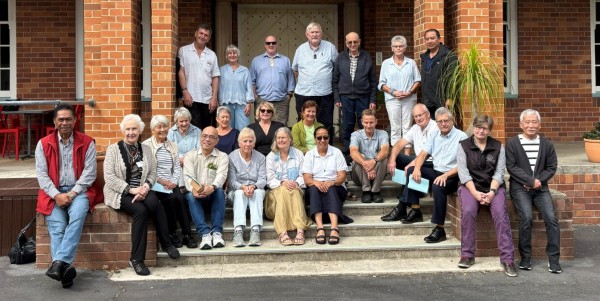
Catholic chaplains who serve some of the country’s vulnerable people – in hospitals and in prisons – gathered recently to reflect on their ministry and those to whom they minister.
The weekend event was hosted at St Francis’ Friary in Auckland and included presentations from those involved in the ministry of chaplaincy, as well as others with particular insights into the Church’s mission and the critical need of self-care and reflection.
Auckland Bishop Steve Lowe, who is also president of the New Zealand Catholic Bishops Conference, took the opportunity to thank the chaplains on behalf of his brother bishops, as well as reflect on his own work in that field.
Bishop Lowe spent time unpacking the Gospel story of the Road to Emmaus as a model for the importance of accompaniment – a central aspect of chaplaincy work.
Fr Mark Chamberlain encouraged chaplains to remember that they always minister with and in the power of Jesus and to draw energy from Christ as they entered each encounter. He encouraged chaplains to look back on encounters and see Jesus’ guiding hand.
Tony Lenton, the senior prison and hospital chaplain for the Catholic Church, addressed the topic of resilience and discussed aspects of the psychological make-up needed to survive the rigours of consistent exposure to people in difficult situations.
Other presenters included Dr Rocio Figueroa, a theologian and abuse survivor, who spoke about the impacts of trauma; Dr John Kleinsman from the Nathaniel Centre for Bioethics, who unpacked some relevant Church documents and posed challenging questions; and Dr Nicki Weld, who highlighted the importance of professional supervision to enhance competence and safety for those who work in demanding roles.
Mr Lenton said the fellowship and interaction among the chaplains was one of the special benefits of the gathering. He noted it was the first time prison and hospital chaplains had gathered together in this way.
“While there are obviously differences in the context of ministry, the disposition of accompaniment and love for the paihere (inmates) and whaiora (patients) remains something held in common,” he said.
Mr Lenton added that he expects “the benefit and insights of the weekend will take some time to filter through our senses”, while noting that “there can be no better time than the Easter season” to reflect on the fruits of the gathering.